CLABSI Prevention Device
Senior CapstoneA handheld UV-C disinfection device for central-line hubs, developed at Duke University's Pratt School of Engineering.
View on GitHubProblem & Need
Central Line-Associated Bloodstream Infections (CLABSIs) occur when bacteria enter the bloodstream via a central line. 40,000 CLABSIs occur annually in the US, causing significant morbidity and mortality, and costing hospitals approximately $1.9B per year, and 65-70% are completely preventable with proper disinfection.
The current standard of care is the Scrub-the-Hub technique, which relies entirely on nurse compliance with manual protocol. Infections arise from human error and inconsistent adherence to workflow. This device removes that dependency.
Need Statement: Hospital nurses need a quick, reliable, and user-friendly system to disinfect central lines to maintain adherence to proper protocols and reduce infection risk in patients.
Why UV-C Disinfection?
DNA and RNA strongly absorb 260 nm UV-C incident light. The high-energy photons create nitrogenous base lesions, distorting the helix structure and blocking transcription and translation, effectively sterilizing the hub surface without chemicals, contact, or manual technique.
Device Design
Mechanical
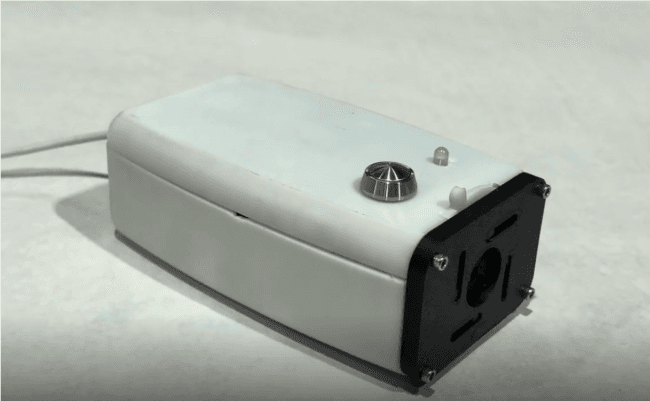
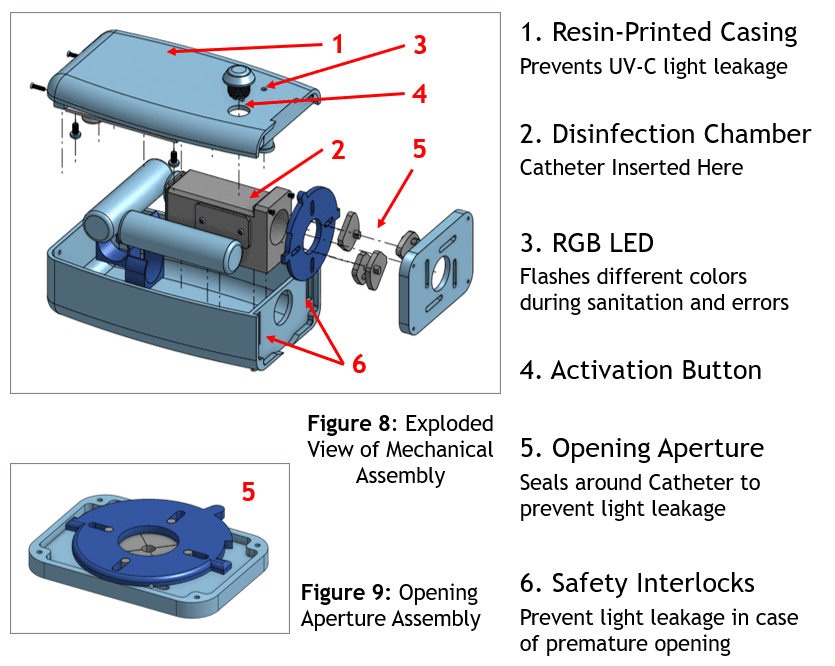
The enclosure is resin-printed to prevent UV-C light leakage. Key mechanical elements:
| # | Component | Role |
|---|---|---|
| 1 | Resin-Printed Casing | Contains UV-C, prevents leakage |
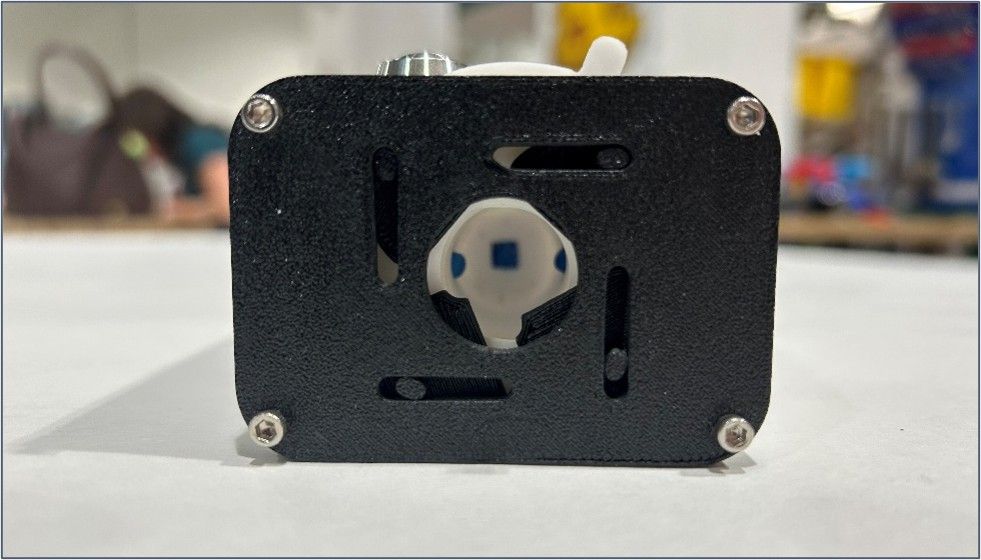
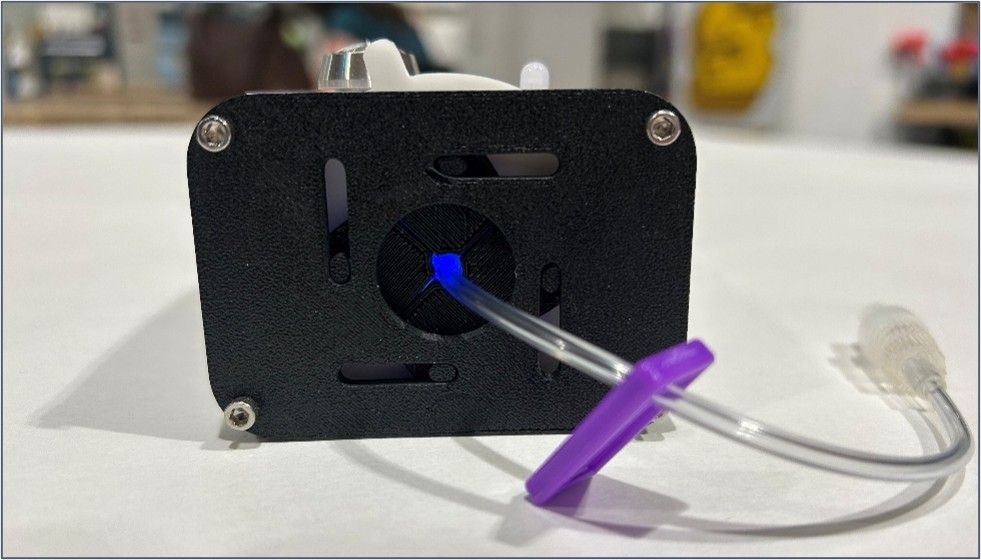
| 2 | Disinfection Chamber | Where the catheter hub is inserted |
| 3 | RGB LED | Color-coded status during operation and errors |
| 4 | Activation Button | Single-button start/abort |
| 5 | Opening Aperture | Seals around the catheter to prevent leakage |
| 6 | Safety Interlocks (×2) | Abort if device opens prematurely |
Electrical
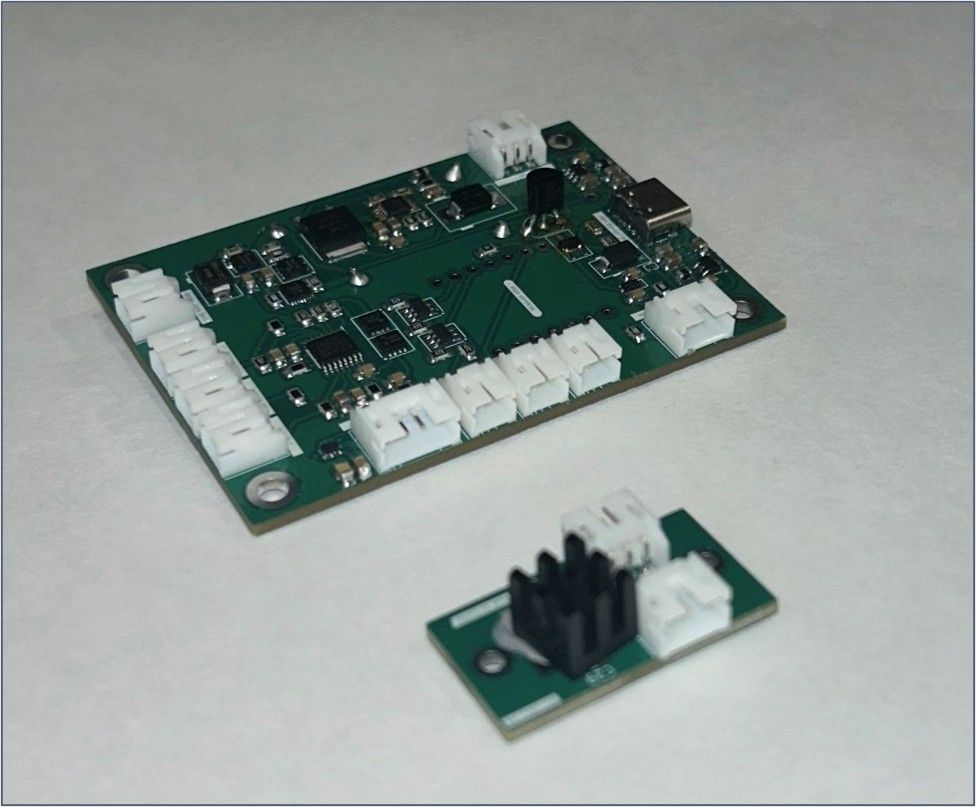
Three custom KiCad PCBs make up the electrical system:
| Board | Function |
|---|---|
| Main | nRF54L15 MCU, power management, BMS (MAX17260), RGB LED driver (LP5815) |
| UVC | UV-C LED driver with current-limiting elements |
| Base | Mechanical base and connector board |
Firmware
Written in C on Zephyr RTOS (nRF Connect SDK), targeting the nRF54L15. The application runs a hierarchical state machine (Zephyr SMF):
| State | Behavior |
|---|---|
INIT | Initialize GPIO, PWM, I2C, BMS, safety interlocks |
IDLE | Awaiting button press; battery SOC displayed on RGB LED |
CHARGING | Charge in progress; RGB indicates charge level |
DISINFECTING | UV-C LED at full PWM; instant abort on interlock open or button press |
ERROR | RGB error pattern + buzzer; cleared by button press |
The critical safety path: interlock GPIO interrupts submit a work item that disables PWM output before the SMF state transition completes, with a mean shutoff time of 17 ± 2 ms, well within the 450 ms safety limit derived from ISO 15858.
Testing Results
| Metric | Value |
|---|---|
| Device Weight | 204 g |
| UV-C LED Optical Power | 2.49 ± 0.047 mW |
| UV-C LED Bandwidth | 262.9 – 273.2 nm |
| Rapid Shutoff Time | 17 ± 2 ms (limit: <450 ms) |
| Germicidal CFU Reduction | 4-log reduction (n=3 replicates) |
Germicidal testing used DH5α bacteria incubated, seeded, and adhered to catheter hubs at room temperature. Hubs were irradiated with UV-C at 0, 2, and 4 hours, then vortexed for CFU counts by serial dilution, achieving a 4-log reduction.
Regulatory & Market
The CLAB-Free device will be classified as a Class II FDA device given the inherent risk of UV light and catheter use. Two potential pathways:
- 510(k), Preferred: If determined similar enough to existing UV surface-disinfecting devices
- De Novo: If disinfection through catheter tubing constitutes a novel use case
Conclusion & Next Steps
The device successfully disinfects central line hubs using UV-C light in the germicidal range, achieves a 4-log CFU reduction, and operates safely within ISO 15858 exposure limits. It is portable, one-handed, and reusable between patients.
Planned next steps:
- Nurse usability testing
- Design of docking/recharging stations
- Autoclavable disinfection chamber redesign
- Head-to-head testing against proper and improper Scrub-the-Hub technique
Project Documents
Final Design History File
Duke BME capstone poster
KiCad interactive bill of materials; click components to highlight on the PCB
Fab-ready Gerber exports for all three PCB boards
Final revision schematic, PCB layout, BOM, and 3D STEP models
Zephyr RTOS application for the nRF54L15 MCU