Pulse Mate: Arterial Line Placement Training Device
VentureWell E-TeamA low-cost, single-operator radial arterial line placement trainer with electronic pulse simulation and touchscreen control. VentureWell E-Team, Duke University. Patent Pending.
Problem
Arterial line insertion involves puncturing the radial artery and threading a catheter to continuously monitor inpatient blood pressure. A study of 357 incoming interns found that only 36.7% had any training in arterial line insertion, averaging just one attempted insertion during all of medical school.
Common complications from inadequate training include pain, swelling, and thrombosis. Major complications occur in ~1% of insertions, affecting an estimated 19,617 patients annually in the US.
Existing Arterial Line Placement Trainers (ALPTs) cost $700–$3,500 and suffer from three key limitations:
- Require two operators: a second person must manually squeeze a bulb to simulate the pulse
- Reveal prior puncture sites: visible marks let trainees locate the artery by sight, removing the palpation task
- High cost: limits availability to well-funded simulation centers
Pulse Mate
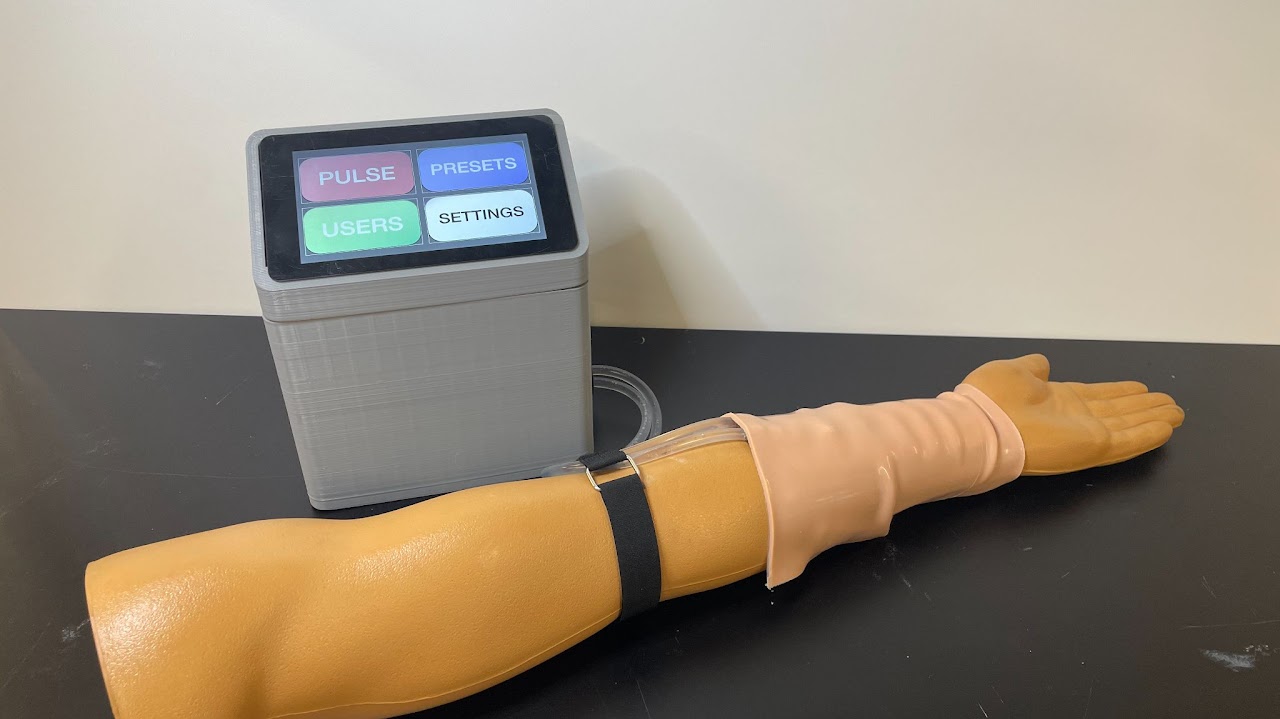
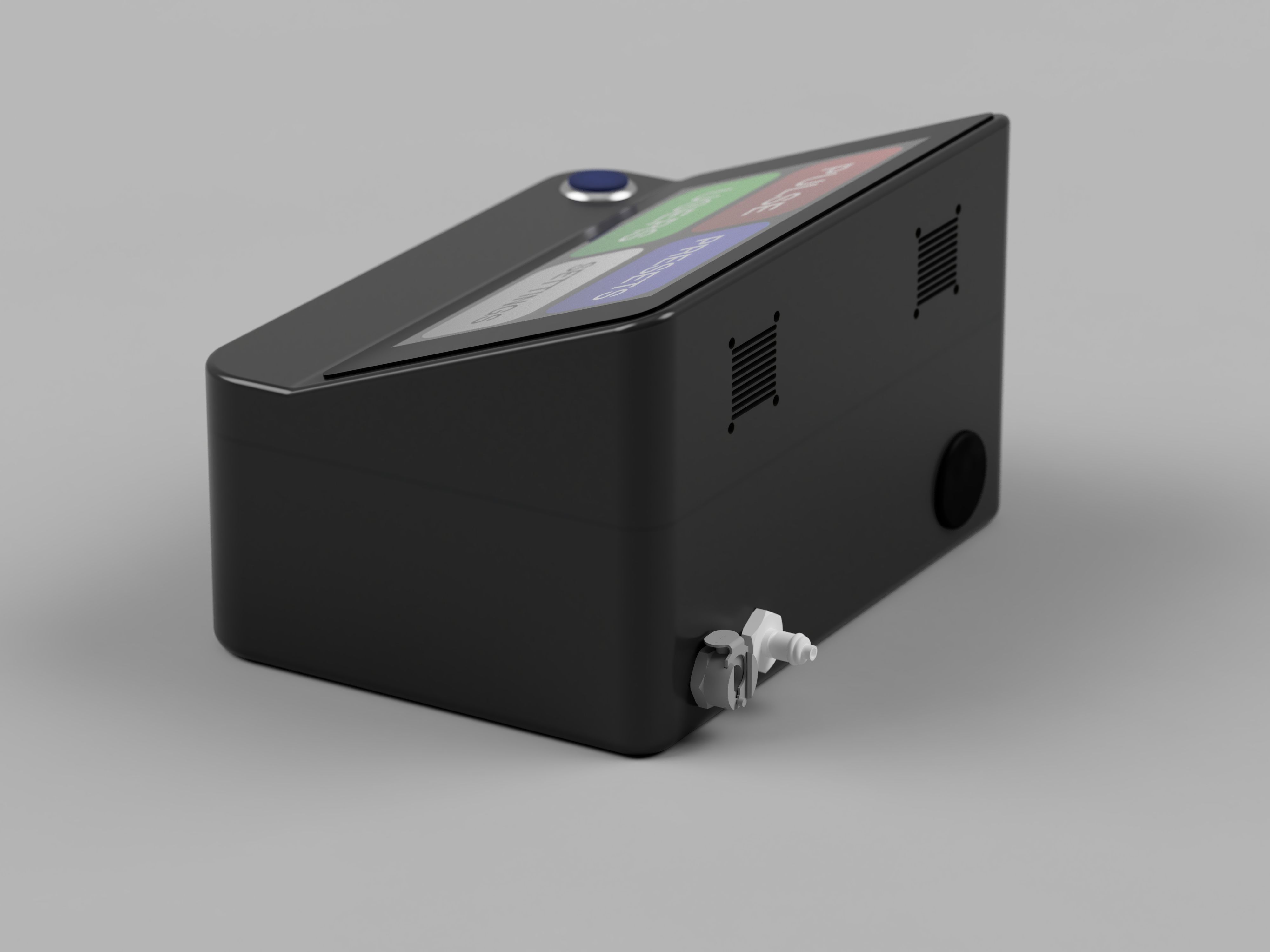
Pulse Mate is a medium-fidelity ALPT built around a repurposed manikin arm. A silicone skin wrap covers tubing embedded in a tissue-simulating insertion medium above the wrist. Simulation blood fills the closed-loop tubing connecting a pump, the artificial artery, and a reservoir, creating a pulsatile feel driven entirely by the electronic control system.
Features
| Feature | Detail |
|---|---|
| Full procedure | Catheter threading and guide wire insertion are possible; blood draws into the catheter canal like a real patient |
| Troubleshooting | Simulates realistic maneuvers taught during training (withdrawal, rotation, re-advance) |
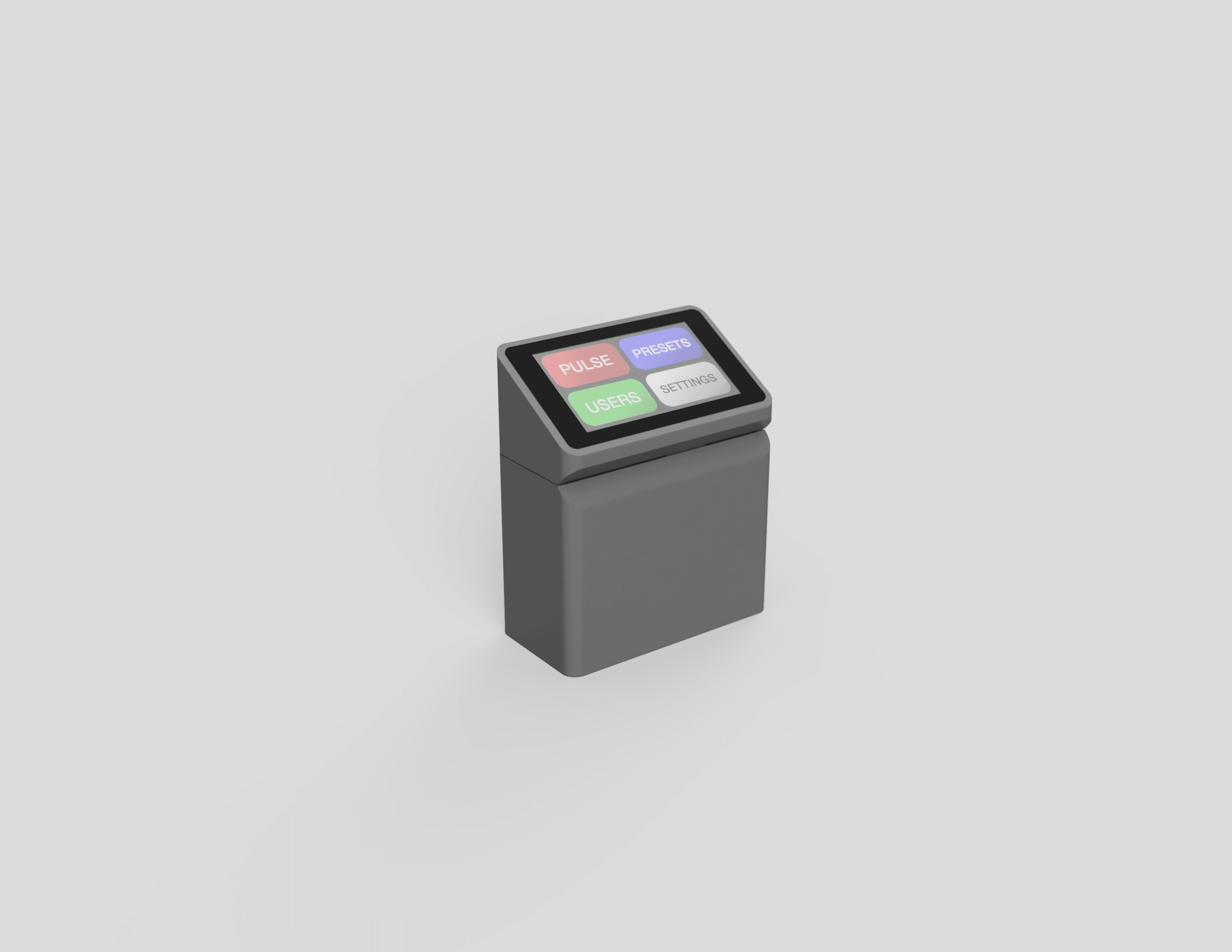
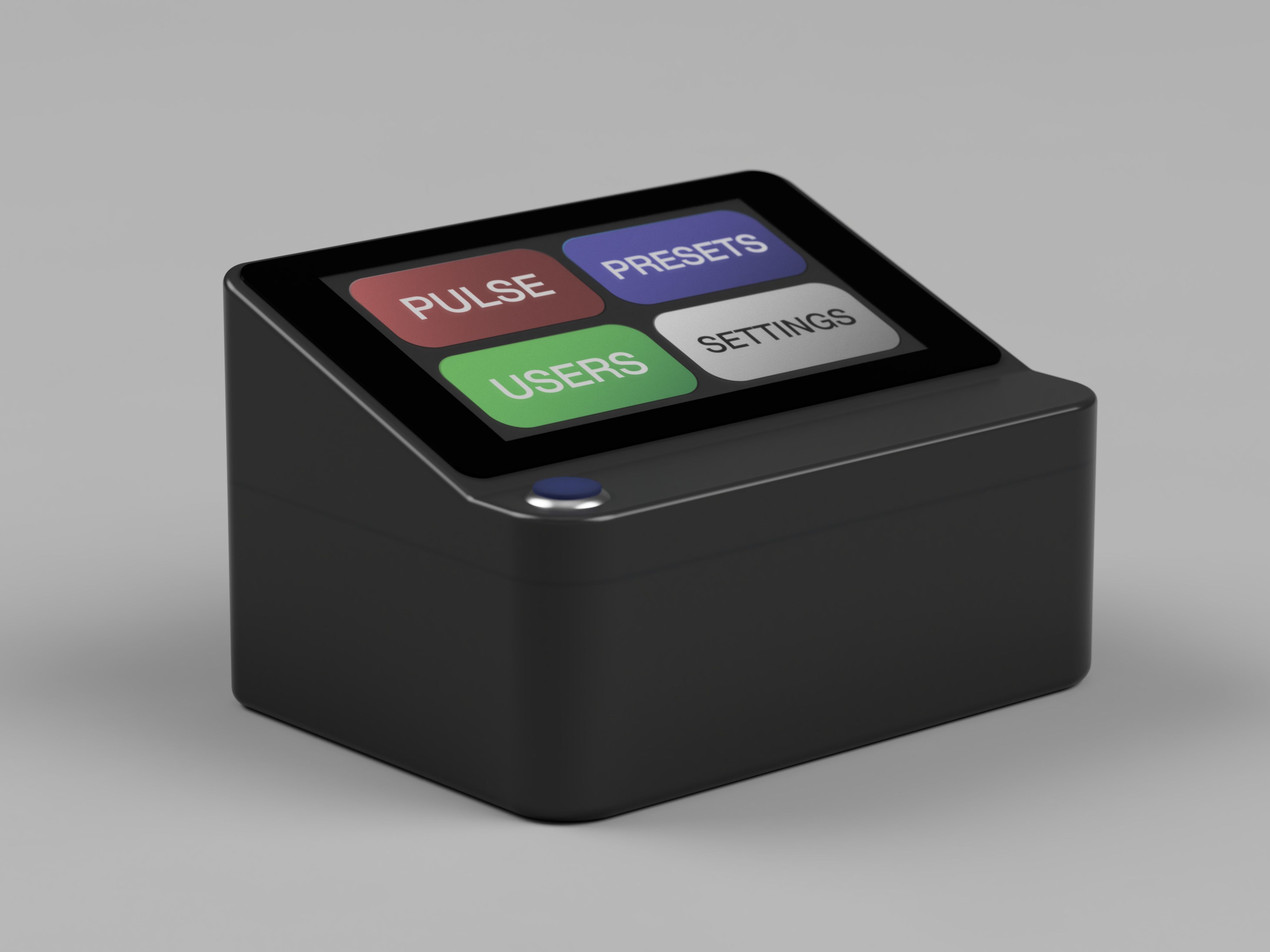
| Touchscreen UI | Adjustable BPM, diastolic pressure, and systolic pressure (unique among ALPTs) |
| Electronic pulse | No second operator needed; pulse is generated by the onboard pump system |
| Multiple skin tones | Replaceable silicone wraps available in multiple tones |
| Replaceable parts | Skin wraps last 300+ punctures; internal tubing is also user-replaceable |
Physician Validation
Tested with 7 attending physicians and residents at Duke Hospital, advised by Dr. Carlos Falcon (Duke Simulation Specialist) and Dr. Ankeet Udani (Head of Duke Hospital Simulation Lab).
| Question | Mean ± SD |
|---|---|
| How realistic does the arm look? | 5.87 ± 0.83 |
| How realistic does puncturing the arm feel? | 5.63 ± 1.60 |
| How realistic does the pulse feel? | 6.14 ± 0.38 |
| How realistic is the feedback after the artery is punctured? | 6.00 ± 0.93 |
| How easy was the device to use? | 6.38 ± 0.74 |
Likert scale 1–7. n = 7 physicians and residents, Duke Hospital.
Market Comparison
| Device | Cost | Pulse Control | User Interface | Operators | Durability |
|---|---|---|---|---|---|
| Pulse Mate | $ | Advanced (BPM + pressure) | Touchscreen | 1 | Advanced (replaceable) |
| Life Form Trainer | $$ | Elementary | None | 2 | Elementary |
| GTSImulators Trainer | $$$ | Advanced | None | 1 | Elementary |